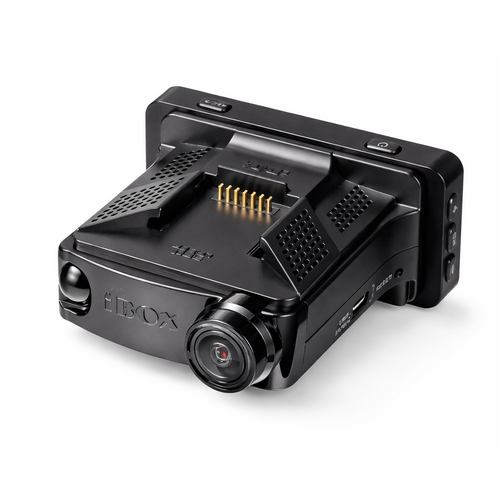
IBOX F5 LaserScan WiFi Signature Dual - Combination Dash Camera Review
Some devices are purchased simply to have something on the windscreen; others have a distinct purpose. The IBOX F5 LaserScan WiFi Signature Dual belongs to the latter group. It combines recording with a horn antenna and signature processing intended to warn early, before a driver learns about a camera through a penalty notice. It appears designed for frequent driving in varied conditions: cities, motorways, business trips, and interregional journeys. One device addresses recording disputed incidents and speed enforcement warnings.
The class is established: a camera, radar section, GPS camera database, display, power, and mount share one housing. Details determine effectiveness. The F5 emphasises a horn antenna, LaserScan, signature recognition, Wi-Fi updates, and a second camera. It records Full HD 1920x1080 at 60 fps, with a 170-degree lens and quick-release powered Type-C mount. A mount, adapter, antiglare filter, installation items, case, and other accessories are generally included, providing a reasonably complete initial kit.
.Principal Strength: Radar Detection
The horn antenna defines the model's appeal. F5 detection performance is the strength that makes many buyers accept the high price and relatively large housing. On motorways, warnings can arrive well in advance, particularly for tripod-mounted and rear-facing enforcement systems. Urban performance is also capable, although more interference and unrelated radio sources complicate matters. Its overall character is early, long-range warning.
It avoids the constant indiscriminate alerts associated with cheap detectors reacting to every supermarket door. Signature processing and the camera database make behaviour substantially more orderly than basic older detectors. However, some vehicles' driver assistance systems and adaptive cruise control can still trigger alerts, and dense urban radio conditions allow occasional false signals. Settings can reduce this remaining interference.
Everyday Vehicle Use
The F5 generally installs easily, mounts securely, and starts automatically as intended. Menus are understandable, and button logic becomes familiar after a few days. Routine use involves driving, occasionally downloading a clip, and updating the camera database every week or two. Wi-Fi is useful. Updates can require additional steps and patience for some users, but remain more convenient than memory card handling.
Recording quality is good without exceptional claims. Daytime images are clear, road details readable, and plates generally visible. The antiglare filter meaningfully reduces windscreen reflections in sunshine. At 60 frames per second, playback appears smoother. Night performance is more restrained: adequate lighting produces respectable results, while dark areas lose detail and distant plates may disappear into noise. A small camera and its optics retain physical limits.
.Second-camera support adds value for frequent parking in confined courtyards or monitoring events behind the vehicle. However, the F5 remains primarily detection-focused. It is a capable recorder and a more interesting combination device; its purpose is strongest when the functions work together.
Potential Frustrations
The F5 confirms that combination devices are imperfect. First, its above-average price raises expectations substantially. Second, not everyone prefers the conventional latch-and-powered mount over a magnetic arrangement. It is reliable but unremarkable. Third, isolated complaints concern cold starts, occasional GPS freezes, and restarts with problematic vehicle power. These are not widespread, but deserve advance consideration.
Smaller irritants include a cable some find short, extra urban alerts, ordinary night footage, and a rear camera weaker than the main camera in darkness. These do not negate the F5 strengths, but qualify an otherwise favourable assessment. It remains capable equipment with characteristics to accept.
Assessment
The IBOX F5 LaserScan WiFi Signature Dual best suits frequent motorway drivers wanting early radar warnings, fewer separate windscreen devices, and regular camera database updates. Its potential may be excessive for a simple urban commute, but long-distance drivers valuing detection range will find it appropriate. This is practical multifunctional equipment rather than a decorative novelty or basic recorder. Its principal ability is looking far ahead and warning in time, a strength that makes several shortcomings acceptable.
Related articles:
IBOX F5 LaserScan WiFi Signature Dual FAQ
iBOX Combination Automotive Devices: RoadScan 4K WiFi GPS Dual, EVO LaserVision WiFi Signature Dual, and F5 LaserScan WiFi Signature Dual